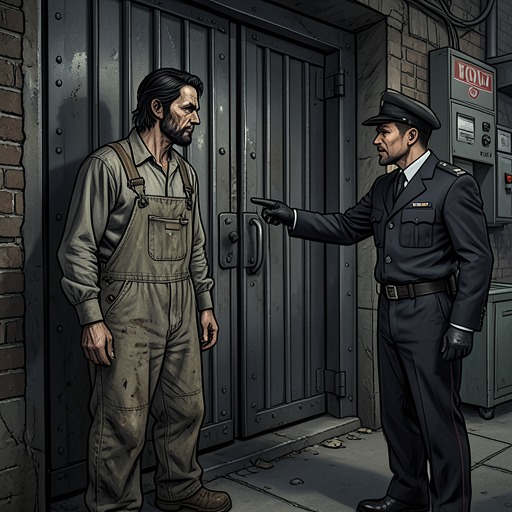
Bryan Stevenson’s legal defense of alibi witness Darnell Houston
Just MercyBryan Stevenson’s legal defense of alibi witness Darnell Houston began with a young man’s insistence that he could disprove a central part of the case against Walter McMillian. Houston offered a specific alibi for Bill Hooks, whose testimony placed McMillian near the crime scene. When Houston’s account threatened the prosecution’s narrative, he was arrested and charged with perjury. Stevenson’s response extended the defense beyond McMillian: he sought to protect a witness whose willingness to tell what he knew had made him vulnerable to the same system he was challenging.
The Alibi and Its Detail
Shortly after visiting Walter McMillian’s family, Stevenson received a call from Houston, a young Black man who said he could establish McMillian’s innocence. Houston was nervous but determined to speak. Unwilling to discuss the matter by telephone, he asked Stevenson to meet him at his home in a rural part of Monroe County, on farmland his family had worked since the time of slavery. Stevenson recalled Houston’s cheerful, carefully styled hair against his worried demeanor; once they sat down, Houston went straight to the case.
Houston’s claim was not simply that Hooks was unreliable. He said that the two of them had worked together at the NAPA auto parts store on the Saturday Ronda Morrison was killed, and that Hooks could not have driven past the cleaners as he had testified. Houston remembered the emergency vehicles racing through town and said that the sirens began around eleven. He placed himself and Hooks together at the store from about eight in the morning until it closed after lunch. Because, as Houston explained, there was only one way out of the store, he said Hooks had not left that morning. The timetable and the shared workplace made the account a concrete contradiction of Hooks’s claim to have been near the cleaners at the time of the killing.
From New Evidence to a Legal Fight
Hooks’s testimony mattered because the State’s case depended on witnesses Stevenson considered deeply unreliable. Hooks had repeated that he saw McMillian leave the cleaners with a bag, get into his low-rider truck, and be driven away by a white man, but had struggled to answer questions about what else he saw or why he was in the area. Stevenson regarded Houston’s account as important new evidence against that testimony, not merely another general objection to the verdict.
The timing created a procedural obstacle. Stevenson had planned to appeal McMillian’s conviction, but once the case moved to direct appeal, new evidence would not be considered. The trial court had already denied an earlier motion for a new trial, filed by McMillian’s original lawyers before they withdrew. Houston told Stevenson that he had also given those lawyers the information, but that no one had taken it seriously. Stevenson therefore moved to reconsider the denial, obtained Houston’s affidavit stating that Hooks’s testimony was false, and considered whether the new district attorney, Tom Chapman, might support a new trial if confronted with compelling evidence.
In capital cases, Stevenson observed, motions for a new trial were routinely filed and rarely granted. Yet new evidence that could change the outcome or undermine the trial’s reliability would typically warrant a hearing. The motion offered a narrow opportunity to place Houston’s account before the court before the appeal foreclosed consideration of new facts. Its denial left Stevenson facing the appeal deadline, with the brief due in twenty-eight days, and deepened the importance of finding and preserving evidence outside the original trial record.
The Perjury Indictment and Stevenson’s Protection
Before Stevenson could resolve how best to proceed, Houston called to say that he had been arrested that morning, taken to jail, and released on bond. He had been told that he was charged with perjury. Houston said that no one had interviewed him about his statement since he had given it; the authorities had simply arrested and indicted him. Stevenson was shocked and furious. In his view, the indictment had been brought without an investigation or compelling evidence that Houston had lied, as punishment for speaking with the defense and contradicting a State witness.
Stevenson nevertheless approached his first meeting with Chapman cautiously. He chose to give the new district attorney a chance to explain the prosecution of Houston before making an angry accusation or filing his stack of motions. Chapman was neither hostile nor unfriendly, but Stevenson left frustrated by his indifference to McMillian’s innocence claim. The encounter made plain that a new prosecutor did not necessarily mean a new assessment of the case. Stevenson filed the motions to show that the defense would contest the charges, while the perjury indictment signaled that people who helped McMillian could themselves be threatened.
After the charges against Houston were dropped, Stevenson visited him at home. Houston was relieved that he would not have to testify or appear in court at that point, but remained shaken. He said that telling the truth was all he had wanted to do, that the officials had scared him, and that he could not risk going to jail. He continued to stand by his account, even as he feared further retaliation. Stevenson told him that what the State had done was illegal and that Houston had done nothing wrong; he also offered to pursue a civil action, though he did not think a lawsuit was wise if it would expose Houston to further harassment. Houston had no interest in bringing one.
A Relationship Under Pressure
The relationship became explicit when Houston asked whether Stevenson was, in fact, his lawyer. Stevenson said he would represent him if anyone created problems because of what he had disclosed. Houston looked somewhat relieved, though Stevenson observed that he was still rattled when they parted. The exchange turned a witness’s disclosure into an attorney-client commitment: Stevenson’s responsibility now included helping Houston withstand the pressure attached to his testimony, even though the judge had denied the motion and Houston was not then required to testify or come to court.
For McMillian’s defense, the intimidation had consequences beyond Houston’s individual case. If witnesses who tried to help were threatened, Stevenson feared that it would be difficult to establish McMillian’s innocence in later post-conviction proceedings, which would require new evidence, witnesses, and facts. The immediate appeal remained the next task, but the experience showed how the search for evidence could be obstructed before that evidence ever reached a courtroom.
The Official Story and the Costs of Contradiction
Houston’s account challenged more than a witness’s timeline. It confronted a prosecution already proceeding despite doubts among Black residents and despite concerns about the credibility of its witnesses. Those concerns sat within a broader legal setting in which Black defendants could face all-white juries even in counties with substantial Black populations. The Supreme Court’s 1986 ruling in Batson v. Kentucky made racially discriminatory peremptory strikes more directly challengeable, but did not erase the practices that had kept juries largely white. Against that background, Houston’s effort to contradict the State’s witness exposed how much depended on whose account officials were willing to credit.
Stevenson later connected contemporary criminal-justice judgments to the enduring myths of racial difference and to a history shaped by slavery, racial terror after Reconstruction, and the Jim Crow system. Houston’s experience gives that analysis a sharply personal form: a witness offered a testable account of where he and Hooks had spent a particular morning, yet the response was an indictment that frightened him into avoiding further confrontation. Stevenson’s decision to affirm that he would represent Houston did not remove the danger, but it made the defense relationship an act of protection as well as investigation.